
The IIHS-HLDI Strategic Plan, 2025-29
Focus Area 3
Extending safety to everyone
Safety for all types of vehicle occupants and nonoccupants has always been part of our mission, but as our work progresses, we must be even more intentional about inclusive safety. When it comes to vehicles, crash-testing by its nature involves standard dummies and configurations meant to represent “typical” vehicle occupants and crashes. But no two people and no two crashes are exactly the same. We will begin to tackle this problem by adjusting the tools and metrics we use in our crash tests and by using virtual testing, which allows for a much broader range of scenarios than physical crash tests. At the same time, we will increase our focus on improving safety for pedestrians, bicyclists and other vulnerable road users through more robust vehicle designs, improved crash avoidance systems, and better infrastructure and policies. As with the risky behavior focus area, our strategy here will involve creating materials and promoting good examples for policymakers and local practitioners.
Yellow shading on the progress bar for each goal indicates a step has been completed.
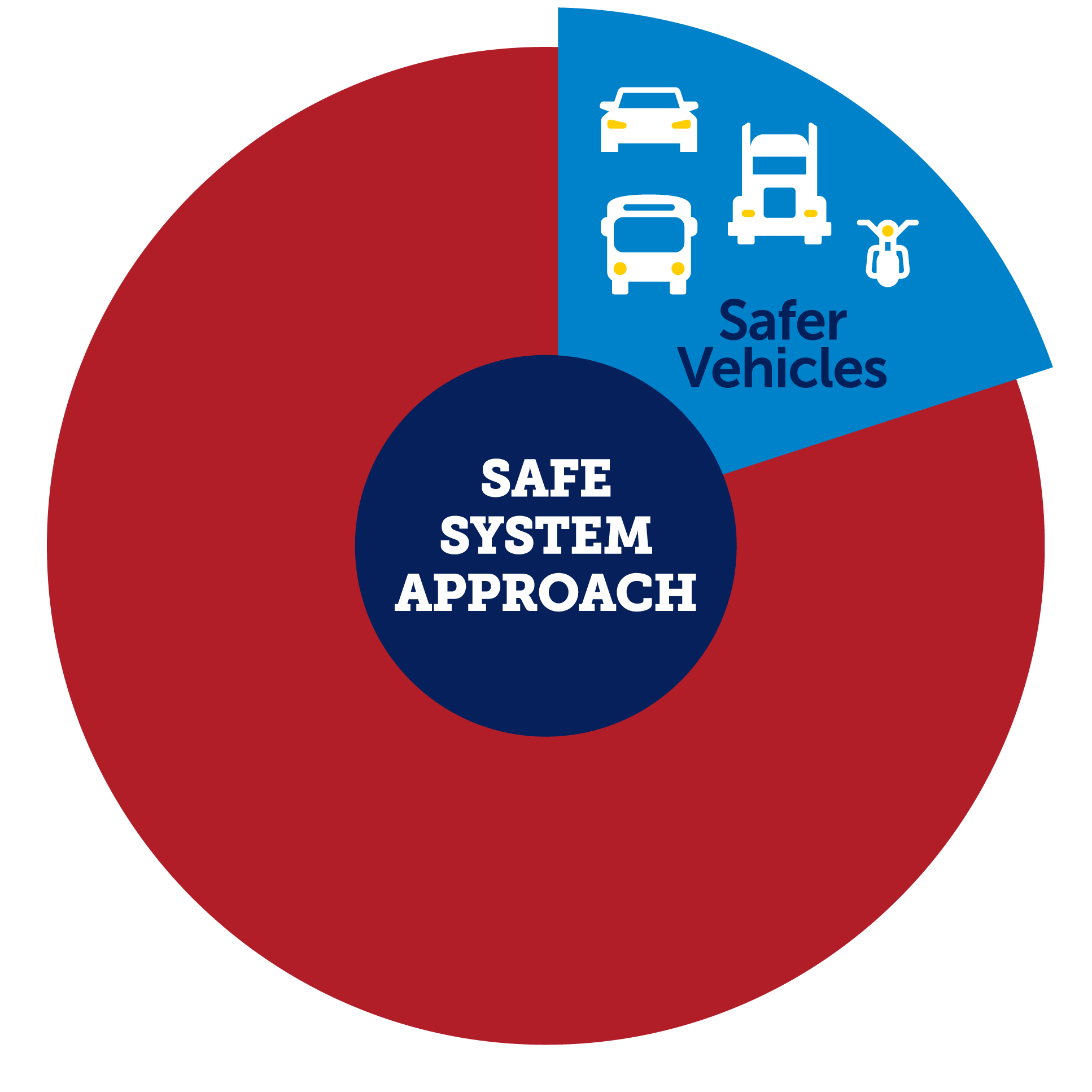
Strategy 1
Promote improved occupant protection across the full population.
Goal 3.1.1
Continue to evaluate risk for occupant factors and crash circumstances not currently addressed by our crash test programs (e.g., occupant age, sex, size, low-speed crashes).
Maintain and expand
Goal 3.1.2
Develop virtual testing program to expand rear-impact evaluations.
Initiate
Deliver
Maintain and expand
Goal 3.1.3
Develop virtual testing programs for additional crash modes.
Initiate
Goal 3.1.4
Evaluate and consider adoption of new injury assessment tools (e.g., pressure sensor to assess chest injury risk) and metrics (e.g., rotational brain injury metrics).
Maintain and expand
Strategy 2
Research and promote vehicle solutions that reduce the risk to vulnerable road users.
Goal 3.2.1
Develop ratings for automatic emergency braking systems that detect and avoid bicyclists.
Initiate
Deliver
Maintain and expand
Goal 3.2.2
Research additional scenarios to expand pedestrian crash prevention evaluations.
Initiate
Deliver
Goal 3.2.3
Study the effect of vehicle shape and size on pedestrian and bicyclist crash outcomes and evaluate countermeasures to mitigate risk.
Initiate
Deliver
Goal 3.2.4
Evaluate the effect of vehicle-based visibility limitations on pedestrian and bicyclist risk.
Deliver
Strategy 3
Through our testing programs, promote the development of crash avoidance systems relevant to a broader range of scenarios.
Goal 3.3.1
Evaluate the effectiveness of aftermarket forward collision warning and consider launching ratings of such systems, which can help bring the benefits of crash avoidance to drivers who cannot afford the newest vehicles.
Deliver
Maintain and expand
Goal 3.3.2
Expand vehicle-to-vehicle front crash prevention evaluations to additional scenarios (e.g., left turn across opposing traffic).
Initiate
Deliver
Goal 3.3.3
Implement virtual testing to expand crash avoidance evaluations.
Initiate
Deliver
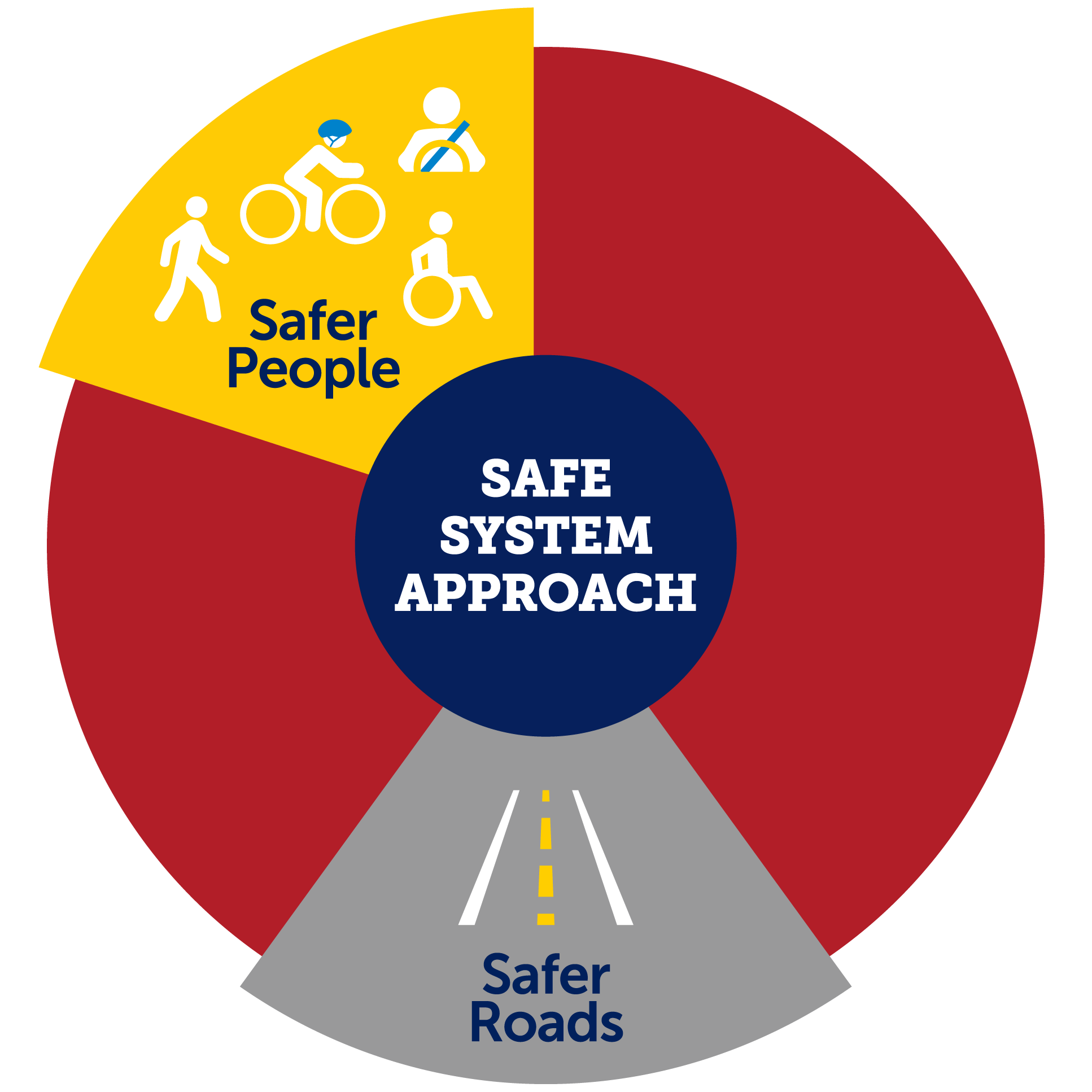
Strategy 4
Promote road design and infrastructure as well as laws and policies that enhance safety of vulnerable road users.
Goal 3.4.1
Demonstrate and evaluate countermeasures addressing vulnerable road user safety through research partnerships with city or state departments of transportation.
Deliver
Maintain and expand
Goal 3.4.2
Evaluate policies affecting vulnerable road users.
Initiate
Deliver
Goal 3.4.3
Examine, promote and look for ways to improve roadway design features aimed at enhancing protection for vulnerable road users.
Deliver
Maintain and expand
Goal 3.4.4
Develop products that help advocates and communities promote proven countermeasures for pedestrian and bicyclist safety, including messaging, calculators and shareable summaries of research.
Initiate
Deliver
Maintain and expand