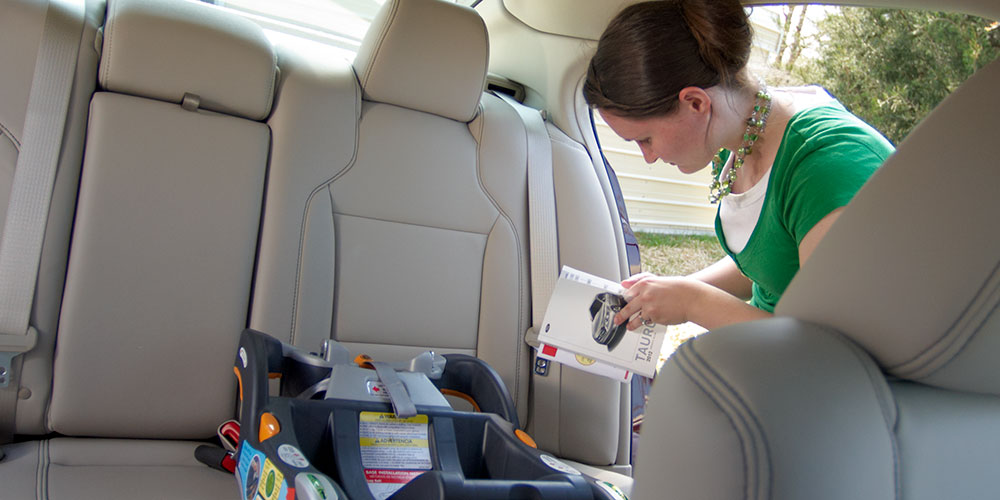
Consult the manual that came with your child seat and also your vehicle owner's manual for instructions on proper installation.
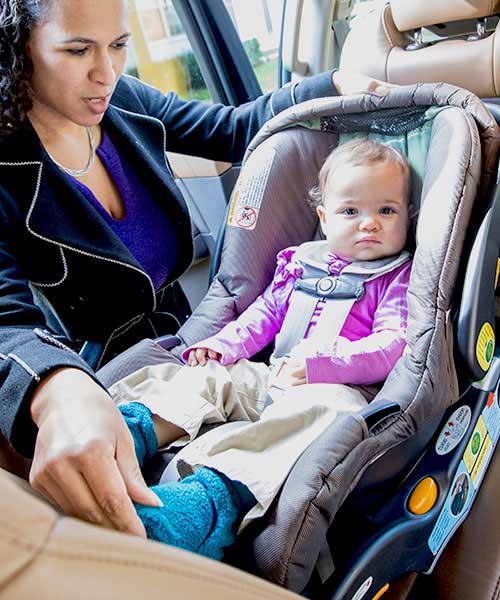
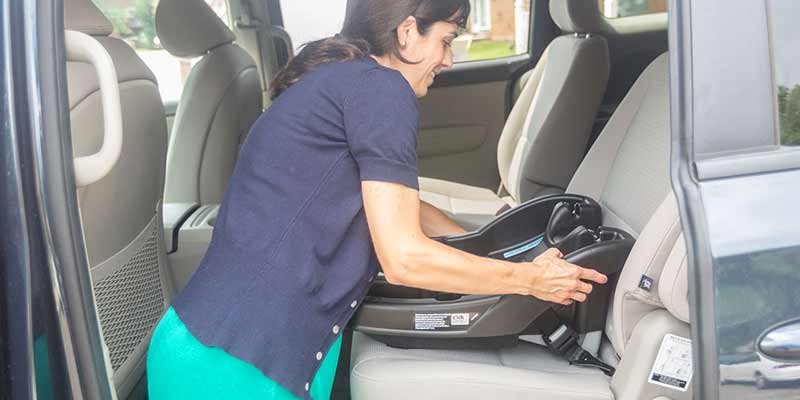
Many infant seats snap into a base that attaches to the vehicle. Make sure the base and seat are tightly secured according to instructions in the manuals for the infant seat and vehicle.
Child restraints for infants and toddlers and infant seat bases need to be secured to vehicle seats using either seat belts or the LATCH system. If done correctly, either type of installation will keep your child safe.
LATCH, which stands for Lower Anchors and Tethers for Children, is a system designed to make it easier to attach child restraints to vehicles securely. Child restraints have lower attachments that can be connected to anchors in the seat, replacing the vehicle seat belt as the primary attachment to the vehicle.
Lower anchors can be used until your child reaches the maximum weight that can be accommodated by your child restraint and vehicle. Check your child restraint manual and vehicle owner's manual for more information. In general, the vehicle seat belt should be used for installation if together your child and child restraint weigh more than 65 pounds combined.
Top tethers attach to anchors on the vehicle's rear shelf, the seatback, floor or other location. Although the top tether is considered a component of LATCH, it should be used whenever a child restraint is installed forward-facing, whether it's installed using the seat belt or with the lower anchors. The top tether provides an additional attachment to the vehicle seat and prevents the child from moving too far forward in a crash. Some child restraint manufacturers also may encourage the tether when rear-facing or encourage use of an anti-rotation support leg, so it's important to review the instructions in the child restraint owner's manual.
LATCH has been required in passenger vehicles since model year 2003 and on child restraints manufactured beginning in 2002. In most vehicles, two rear seating positions must have lower anchors, and three must have a tether anchor.
If a vehicle or seating position is not equipped with LATCH, you'll need to use the vehicle seat belts to secure the child restraint. Many vehicles have some seating positions with top tether anchors but not lower anchors.
Check for a secure installation by pushing and pulling the restraint where the seat belt or LATCH webbing passes through. The child restraint should not move more than 1 inch side-to-side or back-and-forth.
Finally, it's a good idea to take your vehicle to a child safety seat inspection station to have a certified technician look at it to make sure it's been installed correctly.
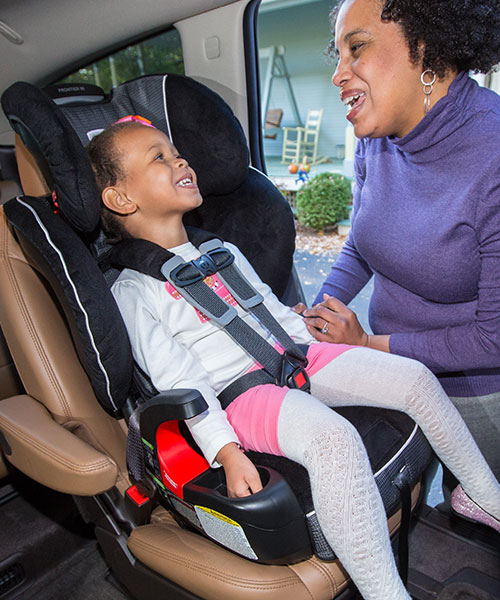
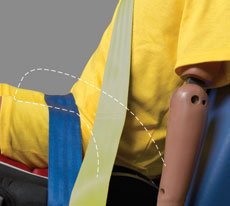
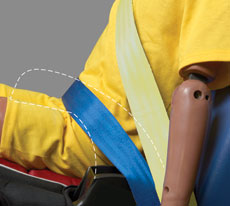
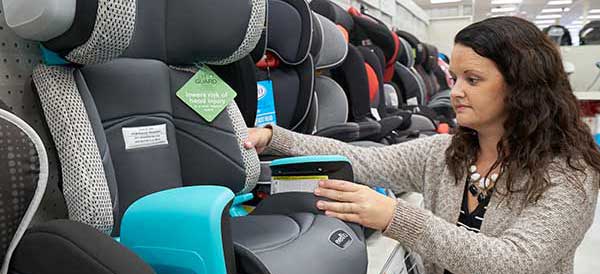
Most booster seats don't attach to the vehicle seat, but people may route the seat belt incorrectly or make other mistakes. Child safety seat inspectors can make sure boosters are being used correctly and can evaluate them for proper fit.