Children are safest when they ride in the back seat in the right restraint for their age and size, until they are big enough for adult seat belts to fit properly. That means starting out in a rear-facing restraint before moving up to a forward-facing restraint and then a booster seat.
Restraining children in rear seats instead of front seats reduces fatal injury risk by about three-quarters for children up to age 3, and almost half for children ages 4 to 8 (Durbin et al., 2015). In the front seat, children, particularly infants in rear-facing child restraints, may be at risk of injury or death from an inflating front airbag.
Any restraint is better than none at all, but an appropriate child safety seat provides the best protection in a crash until children are large enough for adult seat belts to fit properly, usually when a child is about 4 feet 9 inches tall.
Appropriate child safety seats provide significantly more protection in a crash than seat belts alone. Harness-based child restraints reduce fatal injuries by 58%-71% for infants (younger than 1) and by 54%-59% for 1-4-year-olds compared with no restraint (NHTSA, 2009). In comparison, adult seat belts reduce the risk of death in a crash among 1-4-year-olds by 36%.
Children 2-6 years old in child safety seats (including child restraints and belt-positioning booster seats) are about 28% less likely to be fatally injured than those using seat belts alone (Elliot et al., 2006). Children ages 4 to 8 using belt-positioning boosters are 45% less likely to be injured than children using belts alone (Arbogast et al., 2009).
The National Highway Traffic Safety Administration (NHTSA) estimates that child safety seats saved 408 lives in 2019 and an estimated 13,217 lives from 1968 to 2019 (Kahane & Simons, 2024).
The best seat for a child depends on the child’s height, weight, age and developmental level. The best seat is also one that the care provider can use correctly on every trip.
Rear-facing child restraint: A rear-facing child restraint in the back seat is best for babies and young children. Twenty-five states and the District of Columbia require children to be rear-facing until at least age 2. Never put a rear-facing restraint in the front seat of a vehicle with an active frontal airbag. For the best protection, young children should sit rear-facing as long as possible, until they grow too big for the restraint’s height or weight limit.
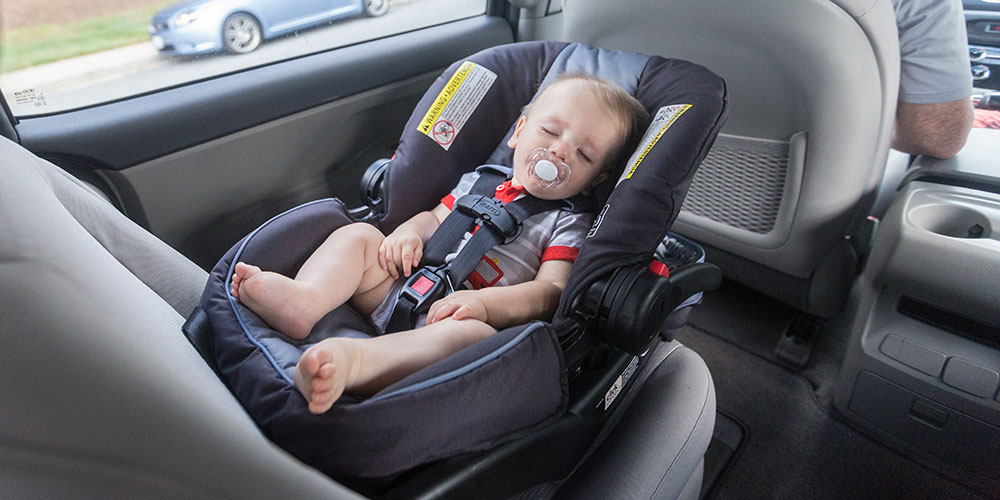
After outgrowing infant-only child restraints like the one shown above — around age 1 — children should be placed in a rear-facing convertible child restraint. These seats can be used rear-facing until the child reaches the maximum height and weight limit for rear-facing use. The limit is typically around 40 pounds and 40 inches, although many seats available today offer higher rear-facing height and weight limits.
Forward-facing child restraint: Forward-facing harness-equipped restraints provide excellent protection when used properly. Children can ride in these seats from about age 2 to 7 years. Children should ride in forward-facing restraints for as long as possible, up to the height or weight limit of the child restraint. Some forward-facing seats have weight limits as high as 90 pounds.
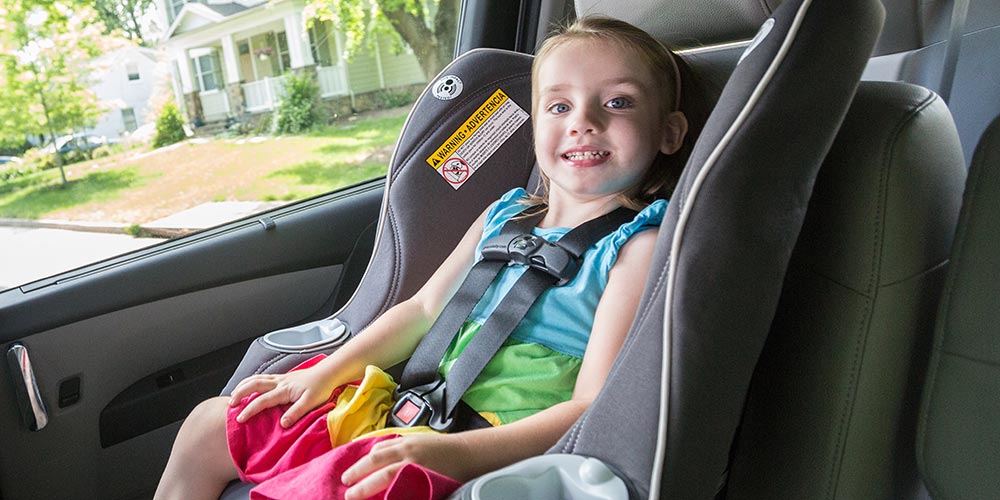
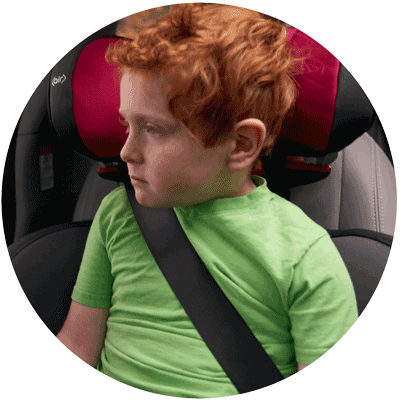
Booster seat: Kids too big for child restraints should use belt-positioning booster seats until adult belts fit right. For some kids, that's not until age 12.
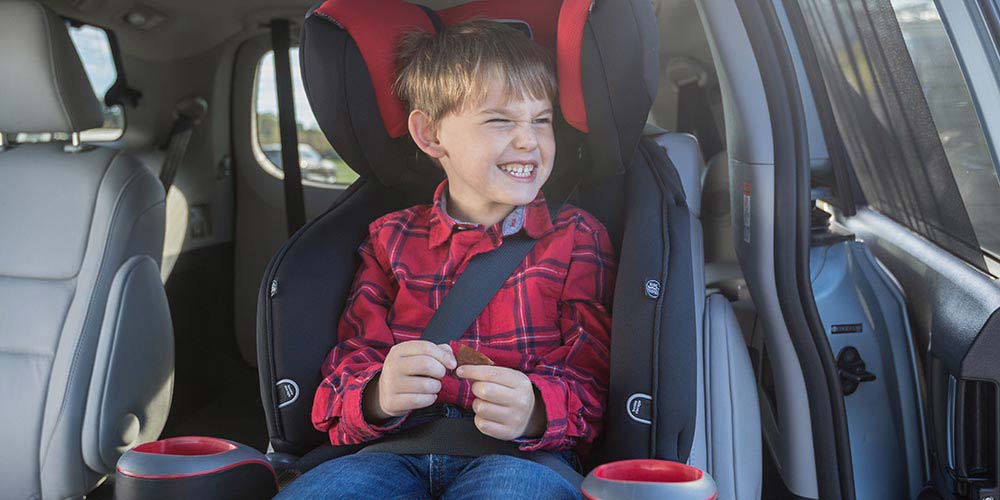
With or without a booster, the shoulder belt should fit snug across the center of the shoulder and not across the neck or face or slipping off the shoulder. The lap belt should lie flat across the upper thighs and not on the tummy.